
Twelve Posts. One Argument.
On what the season established, and what it asks of you now.

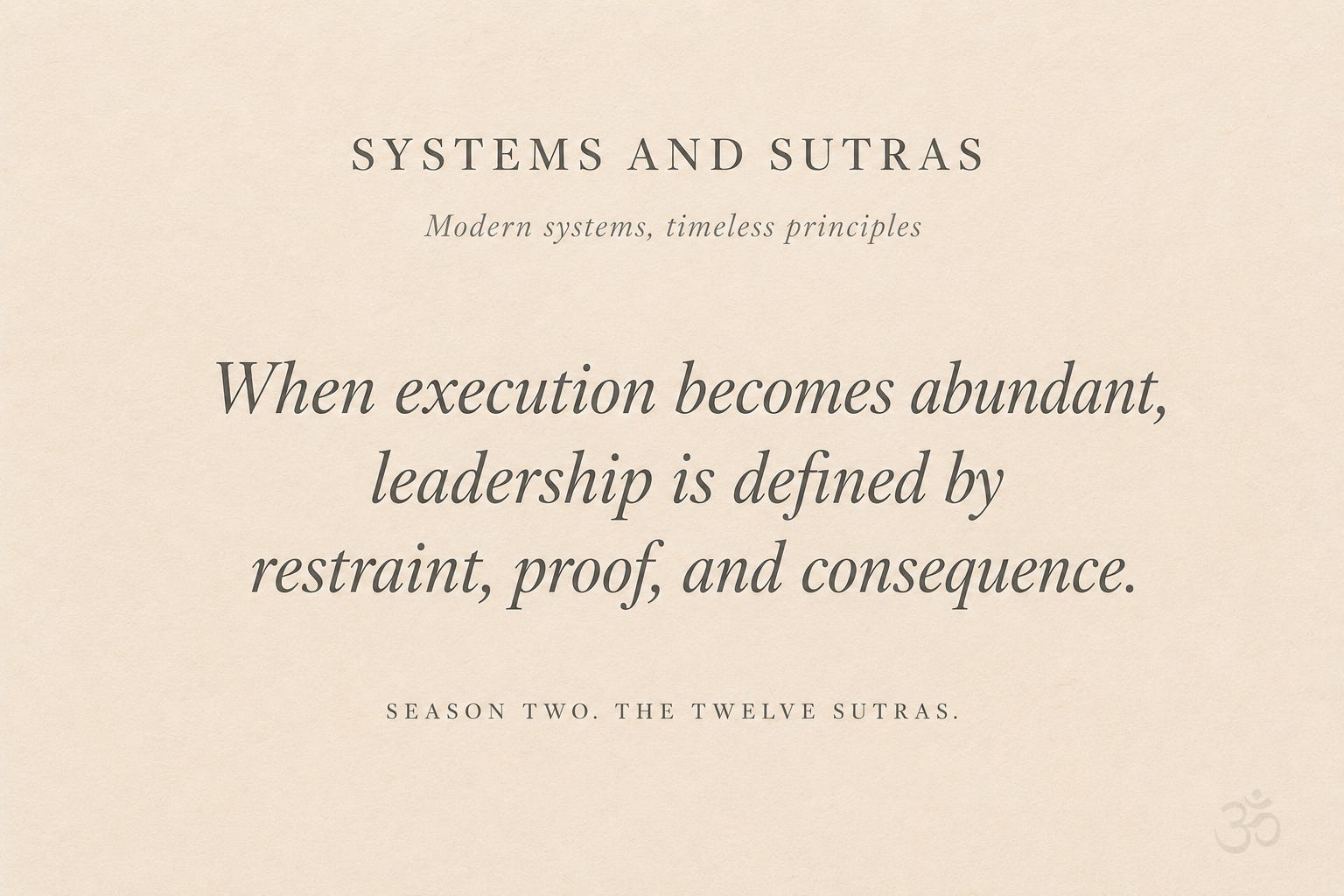
Twelve posts.
Reading them as a set, what I see is one argument that I did not fully see when I began.
Season Two of Systems and Sutras started as a question about what leadership is for when execution becomes abundant. The work of twelve posts produced an answer that, in retrospect, holds together as one sentence.
When execution becomes abundant, leadership is defined by restraint, proof, and consequence.
That sentence is the season in one line. Everything else was the work of finding out what it actually means.
The Four Chapters.
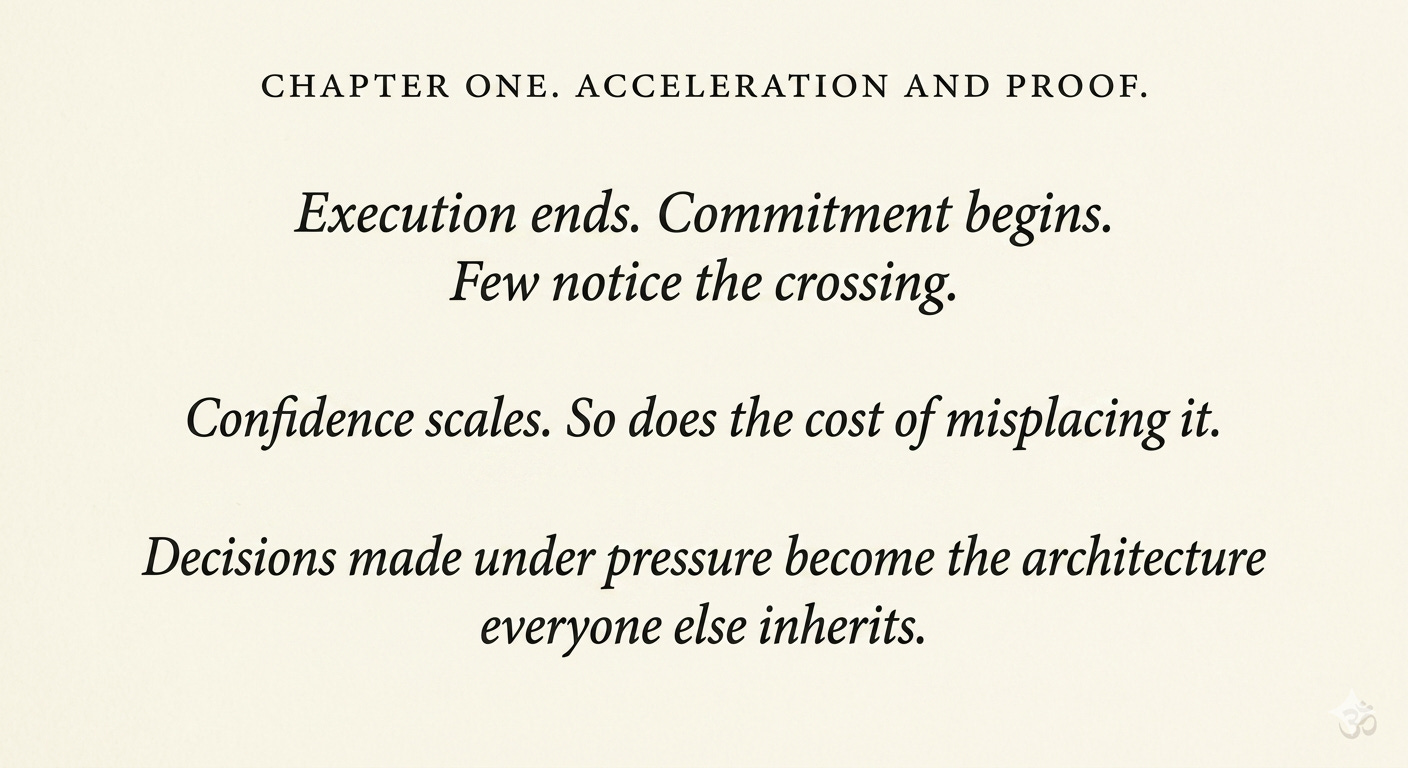
The first chapter, looking back, was the one I had to start with. Acceleration has not changed consequence. Execution is cheap, but commitment is not. Speed without proof is speculation. Decisions made under pressure become the architecture everyone else inherits. What does AI accelerated leadership require? Slower thinking about the decisions that cannot be unmade.
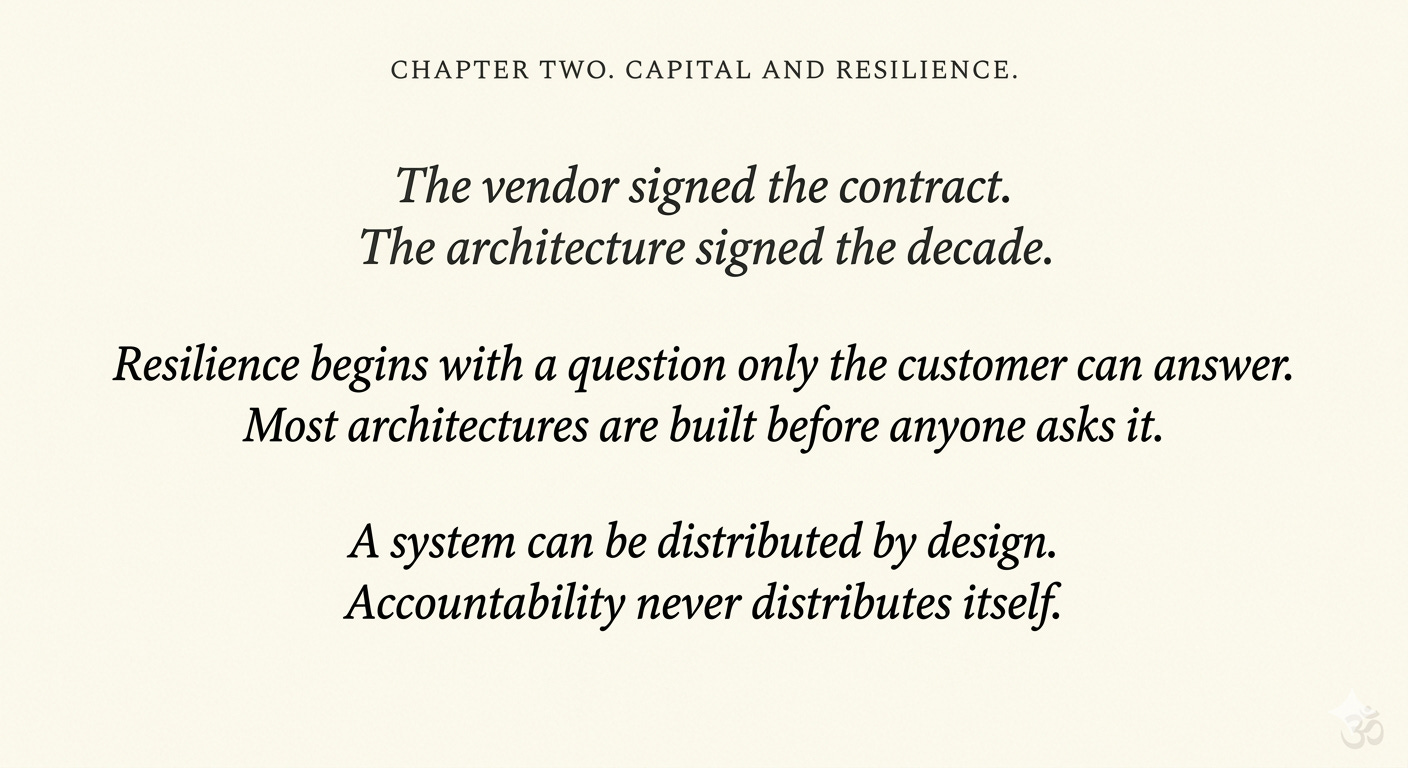
The second chapter, I see more clearly now, moved from acceleration to capital. Architecture is capital allocation. Resilience is a customer commitment, not a technology standard. Accountability does not distribute itself when systems do. Every architectural decision is a financial decision wearing technical clothes, and the organisations that navigate this well make that visible at the point of decision rather than at the point of consequence.
The third chapter is where the argument turned. From capital to executive liability. Failure is always funded, the question being whether the funding goes to containment before or remediation after. Organisations carry forward, in the system itself, what they were never designed to hold. And every leader manages two inheritances simultaneously, what they receive and what they will leave. What survives the leader and behaves correctly without supervision is the measure.
The fourth chapter, in retrospect, was the one that closed the structure. From liability to practical translation. How leaders are read by audiences that read through their own filters. What legacy systems actually are when the word is used precisely. What the work of leadership produces that outlives the seat. The season closes on what endures.
The Spine.
The twelve sutras, taken as a set, are the season’s argument at its most compressed. Each one closed a post. Together they trace a sequence from the moment of commitment, through the capital and the customer at the centre of the architecture, into the leader’s stewardship of what they inherit and what they leave.
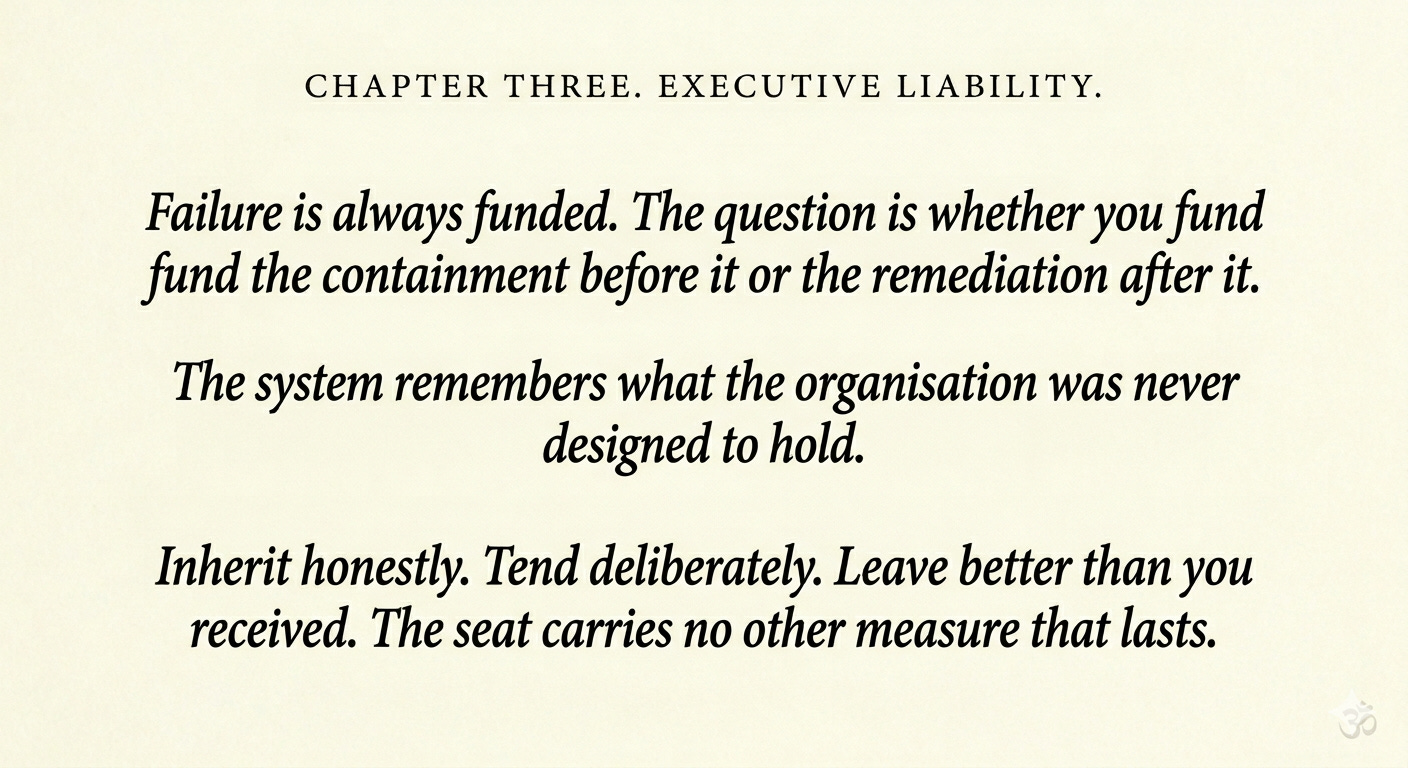
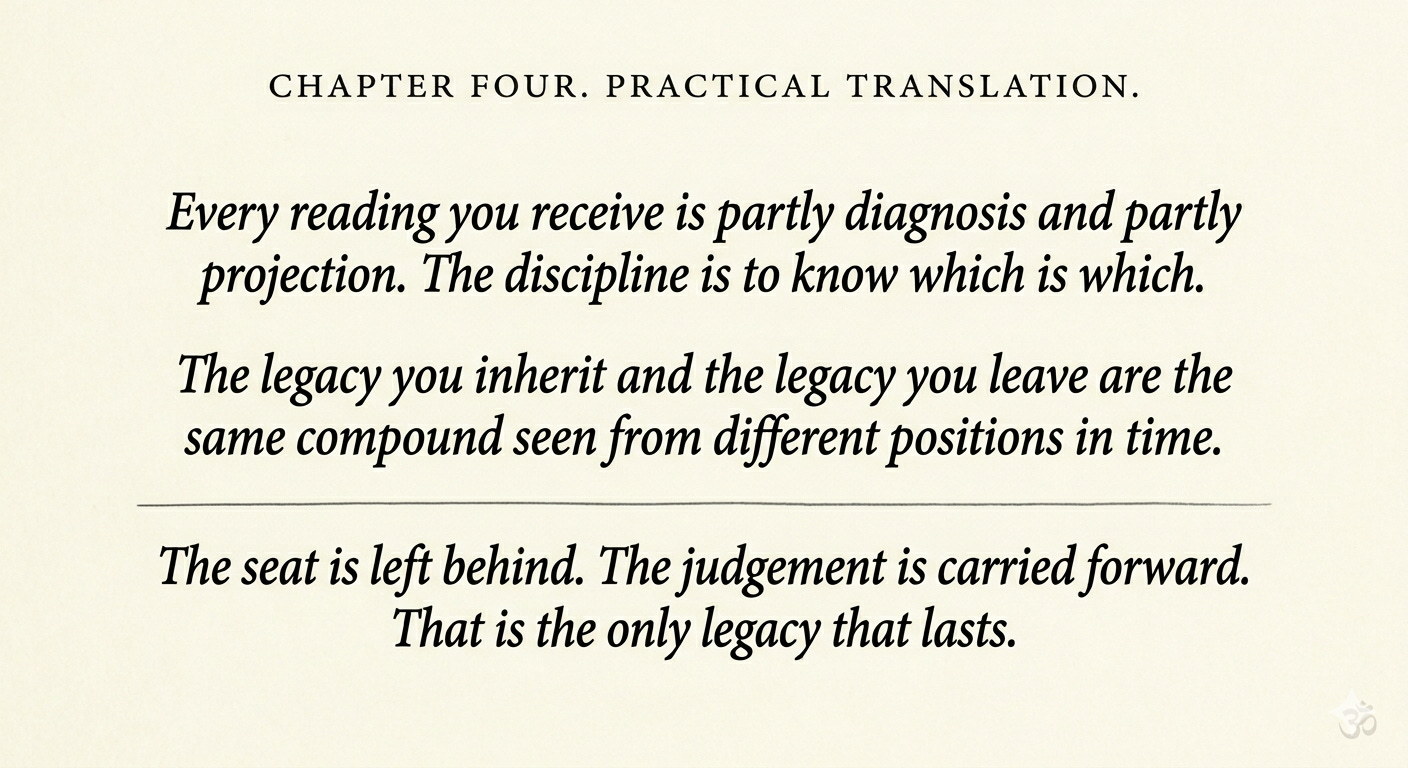
The closing sutra names what the work was for. The seat is left behind. The judgement is carried forward. That is the only legacy that lasts.
The Questions I Keep Coming Back To.
The season’s disciplines are a way of seeing. But a way of seeing arrives in the form of questions a leader asks themselves before the commitment is made. These are the ones I keep coming back to.
When did I last refuse to make a decision because it was not yet reversible? When did I last ask the team not what they have tested, but what they can prove? Where is the metric in the organisation that is shaping behaviour in a direction nobody has explicitly chosen?
Where is the inherited liability in the estate that nobody has named yet, because naming it would create an obligation to act on it? Whose reading of me am I treating as diagnosis when it is actually projection, and whose am I dismissing as projection when it is actually diagnosis?
And the one I sit with most often. What in my current tenure will still be operating after I have left the seat, and would I be content with what it carries forward?
These are not questions a framework answers. They are questions a leader lives with.
What The Season Was.
The season was an argument that leadership in technology, when execution becomes abundant, becomes a discipline of restraint, proof, and consequence. The technical decisions remain technical. But the leader is now aware of what they actually are. Capital allocations. Inheritance decisions. Acts of stewardship. Material that will outlive the moment in which it was committed.
That is what I came to see across twelve posts. The recognition is now yours to carry too.
If you found this useful, the likelihood is someone you know is asking the same question. Pass it on.